
Responsible Travel
The world is worth seeing. It’s also worth looking after.
We’re a travel business, and we think carefully about what that means. Here’s our honest take on responsible travel – what we believe, how it shapes the trips we plan, and what you can do as a traveller.
Our Position
We Sell Travel. We Also Care About Where It Leads.
There’s an honest tension at the heart of what we do. Travel is one of the great joys of life – it broadens perspective, creates lasting memories, supports economies, and connects people across cultures. We believe in it deeply. We’ve built a business around it.
But travel also has a footprint. Flights emit carbon. Popular destinations suffer from overtourism. Wildlife is disturbed. Local cultures are commercialised. These things are real, and pretending otherwise would be dishonest.
That means thinking about where we go and how. It means supporting local economies rather than leaking tourist money straight to international chains. It means respecting the places and people that make destinations worth visiting in the first place. And it means being honest with our clients about these things, even when it’s easier not to be.
This page is our attempt to lay out what that looks like in practice – not as a marketing exercise, but as a genuine statement of how we approach the work.

“We don’t think the answer is to stop travelling. We think the answer is to travel better.”
What We Mean By Responsible Travel
Three Things We Think About
01 – Communities
Supporting the people who make destinations worth visiting
The communities in the destinations our clients visit are not a backdrop. They’re the reason the place is special. Responsible travel means making sure that some of the money you spend actually reaches them.
01 – Communities
Supporting the people who make destinations worth visiting
The communities in the destinations our clients visit are not a backdrop. They’re the reason the place is special. Responsible travel means making sure that some of the money you spend actually reaches them.
02 – Environment
Travelling in ways that protect the places we go
Natural environments are not inexhaustible. Reefs bleach, forests shrink, coastlines erode. How and where we travel has a direct bearing on whether these places survive for the next generation of visitors.
02 – Environment
Travelling in ways that protect the places we go
Natural environments are not inexhaustible. Reefs bleach, forests shrink, coastlines erode. How and where we travel has a direct bearing on whether these places survive for the next generation of visitors.
03 – Culture
Respecting the cultures and places we’re guests in
When we travel, we’re visitors. That comes with responsibilities – to understand and respect the customs, values, and sacred spaces of the people and places we encounter.
In Practice
How This Shapes The Trips We Plan
These aren’t abstract principles. They show up in the actual choices we make when putting together a trip – which hotels we recommend, which operators we use, what we tell our clients.
We don’t always get it perfectly right. But we think about it, and we’re willing to be held to account on it.
1.
We ask about your priorities, not just your budget
When we’re finding accommodation, we ask whether sustainability matters to you and reflect that in what we recommend. We don’t assume everyone wants the same thing, but we include responsible options.
2.
We flag overtourism concerns where they’re relevant
Some destinations are under real strain from too many visitors. When a client asks about somewhere we know is under pressure, we’ll say so and suggest a quieter alternative or a less impactful way to visit.
3.
We don’t recommend wildlife experiences we can’t verify
Animal tourism varies widely, from ethical sanctuaries to operations that cause real harm behind the scenes. We won’t suggest experiences we haven’t researched, and we’re honest if we’re unsure about one you’ve found.
4.
We give clients the cultural context they need
Good preparation means more than knowing your airport. We brief clients on customs, expectations, and cultural sensitivities, especially in destinations where travellers often get things wrong without realising.
5.
We work with operators who share these values
We choose operators who show real commitment to responsible tourism, not just statements on a website. If we have concerns about a supplier, we don’t use them, even if they’re cheaper or more convenient.

The Honest Bit
What About Flying?
We won’t pretend that flying is environmentally neutral. It isn’t. Aviation accounts for a meaningful share of global carbon emissions, and long-haul flights in particular have a significant footprint per passenger.
As a travel business, we book a lot of flights. We think about this, and we don’t think the answer is to pretend the issue doesn’t exist or to offer easy reassurances that don’t stand up to scrutiny.
Here’s what we actually do: We tell clients the truth when they ask. We help them think through whether a destination can be reached by train or ferry for shorter trips – and we actively recommend those options when they’re practical. For longer journeys where flying is the only realistic option, we encourage clients to consider the length of the stay relative to the journey – a two-week trip represents a very different carbon footprint per day than a long weekend.
We also believe strongly that travelling less frequently but for longer is a more responsible pattern than multiple short trips – and we’re happy to advise clients on how to make the most of a longer visit to a destination.

“The world is a book, and those who do not travel read only one page – but those who travel carelessly miss the story entirely.”
For Travellers
Small Choices, Real Difference
You don’t have to be a sustainability expert to travel more responsibly. Here are four things any traveller can do that genuinely make a difference.
Stay local, spend local
Choose locally owned accommodation over international chains. Eat at family-run restaurants. Buy from local markets and craftspeople. This is the single most direct way your spending benefits the community you’re visiting – the difference between money staying in a place and money flowing straight back to a global corporation.
Travel in the shoulder season
Visiting popular destinations outside peak season reduces pressure on infrastructure, spreads tourism income more evenly across the year, and honestly often makes for a better trip. Fewer crowds, more authentic experiences, and a lower environmental load on the destination. We’ll always tell you the best time to visit for exactly this reason.
Go deeper, not just further
The best travel experiences usually come from slowing down – staying longer in fewer places rather than rushing through many. This reduces your travel footprint and tends to produce richer, more memorable experiences. Getting to know a place takes time. We plan trips that give you that time.
Learn before you land
A little cultural preparation goes a long way. Understanding the basic customs, the appropriate dress for religious sites, the etiquette around photography, and the social norms of the place you’re visiting means you arrive as a respectful guest rather than an oblivious one. We’ll give you the context you need before you go.
How We Choose Who We Work With
The Suppliers and Operators We Recommend
We don’t recommend suppliers based on commission rates or convenience alone. When we’re putting together a trip, how an operator or property conducts itself matters to us – and increasingly to our clients.
Here are the things we look for, and the questions we ask.
Local employment and fair treatment of staff
Does the hotel employ people from the local community? Are staff paid fairly? These questions matter more than a recycling symbol in the bathroom.
Genuine environmental commitments
We look for properties and operators with verifiable environmental practices – renewable energy use, water conservation, waste reduction – not just a green logo and a linen reuse card.
Recognised accreditations where available
Certifications like Travelife, Rainforest Alliance, and B Corp are not perfect, but they provide a baseline of accountability. We take them seriously as one signal among several.
Transparency about their practices
Good operators are willing to answer questions about how they operate. If a supplier is evasive about its practices or can’t substantiate its claims, that tells us something important.

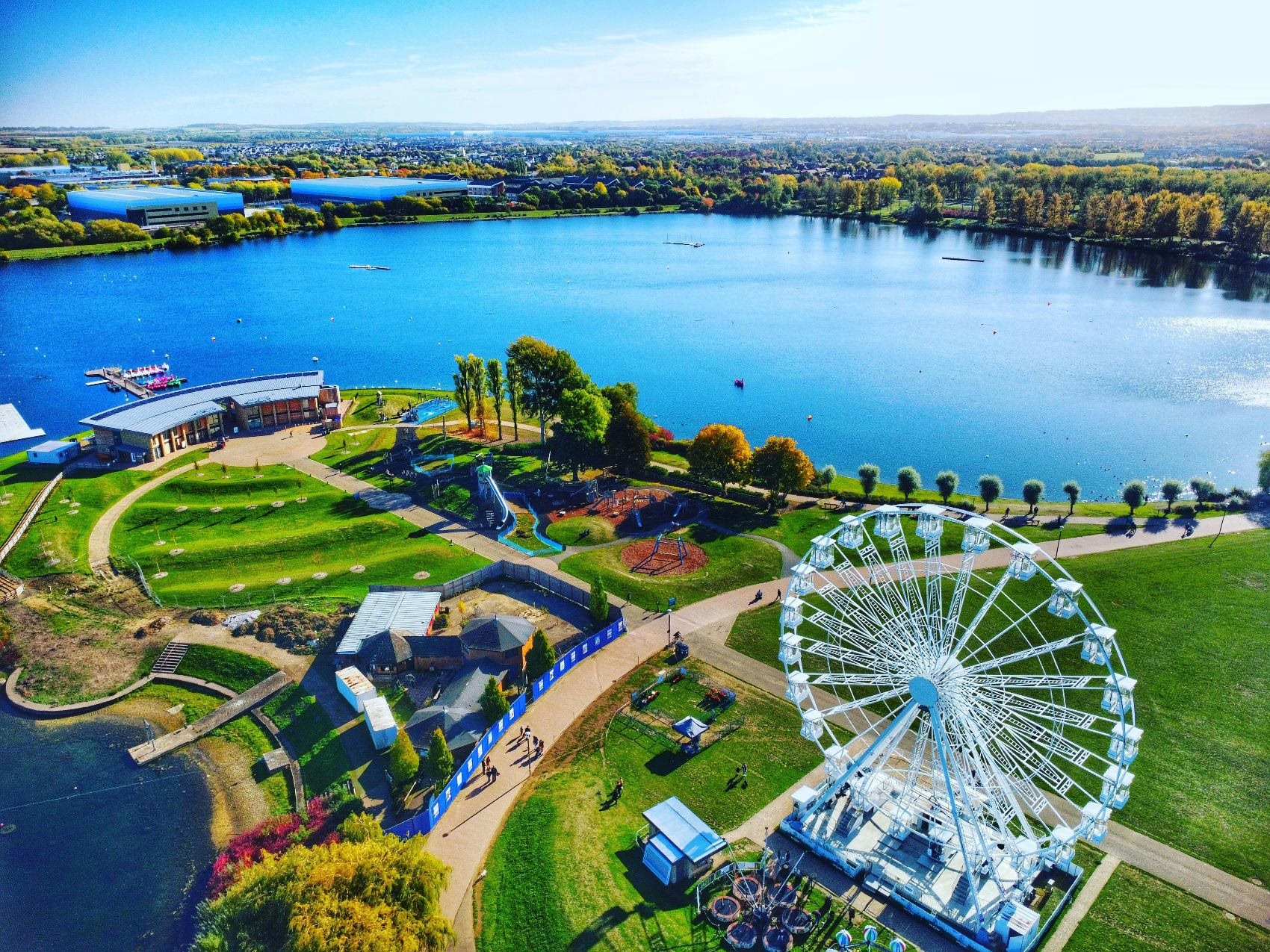
Responsible Travel Starts At Home Too
Our commitment to doing the right thing doesn’t stop at the destination. Back home in Milton Keynes, we’re proud sponsors of the Henry Allen Trust – a charity we support because we genuinely believe in it, not because it looks good on a website. Read more about our social value commitments and community involvement.